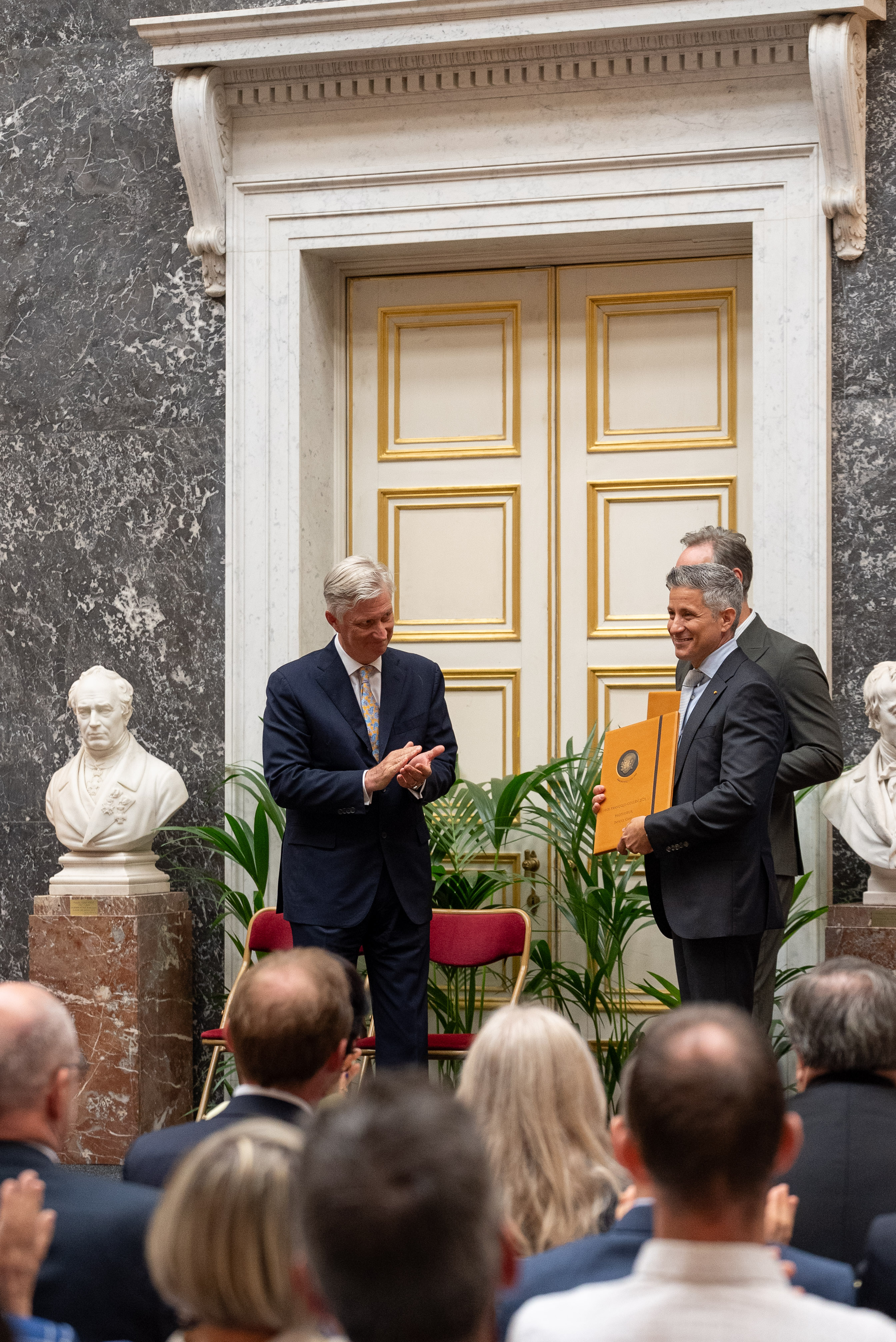
Patrice Cani (UCLouvain) has been awarded the prestigious 2026 Francqui-Collen Prize!
Congratulations to Patrice Cani, co-winner of the 2026 Francqui-Collen Prize, regarded as the Belgian Nobel Prize! A full professor at the Louvain Drug Research Institute at UCLouvain, Principal Investigator of a PDR FNRS and Researcher at the WEL Research Institute, Patrice Cani is being recognised for his research at the intersection of nutrition, the gut microbiota and metabolic diseases associated with overweight and obesity, such as type 2 diabetes, cardiovascular diseases and certain cancers. With a constant ambition to link fundamental research to clinical and societal applications.
Patrice Cani is a joint winner of this prestigious award with Diether Lambrechts (KU Leuven/VIB), recognised for his research into the best treatments for cancerous tumours.
Born in Montignies-sur-Sambre into a working-class family with immigrant roots (his father is Italian and his mother is French of Spanish origin), he wanted to become a heart surgeon to treat family members suffering from cardiovascular diseases. His career took a different turn after meeting a dietitian at the age of 17.
After completing his PhD thesis under the supervision of Nathalie Delzenne, a nutrition specialist and winner of the 2025 FNRS Five-Year Prize in fundamental biomedical sciences, and a formative postdoctoral fellowship in Toulouse, Patrice Cani spent much of his career as an FNRS researcher. He was appointed Research Fellow in 2006 before securing a permanent research post: he was named Senior Researcher in 2009, promoted to Principal Researcher in 2017 and then to Director of Research in 2021, a position he holds until 2023. He also received the Baillet Latour Prize in 2015 and the AstraZeneca Prize in 2022, both awards administered by the FNRS.
The Francqui-Collen Prize recognises Professor Cani not only for his work and research into the interaction between our gut bacteria and our brain, but also for his groundbreaking discoveries regarding the beneficial effects of a gut bacterium: Akkermansia muciniphila.
“The cells lining our intestines are like the building blocks of a castle wall, whilst the protective layer of mucus in our intestines is like a moat filled with water, keeping bacteria at bay. The immune system is like the soldiers on the walls, explains Patrice Cani, using a vivid analogy. An unhealthy, high-fat diet dries up this moat, allowing the enemies -bacterial toxins - to approach easily, breach the wall and cause chronic inflammation in the body.”
Through all this work, Patrice Cani has transformed our understanding of the role of the gut in health and disease, establishing the microbiome as a key player in metabolic physiology and a leading therapeutic target, moving from the laboratory to the patient’s bedside. His motto is: “In Gut We Trust”.
With this prestigious prize, Patrice Cani intends to launch a citizen science project to collect data on the gut microbiota of French-speaking Belgian volunteers, actively including vulnerable groups, in order to explore the links between diet and mental health, and to generate knowledge useful for public prevention policies.
The Francqui-Collen Prize is endowed with €250,000 to promote excellence in non-commercial basic research.
In press:
La libre
Le Soir
The Future
RTBF
L'Echo
Daily Science
(c) Palais / Fondation Francqui